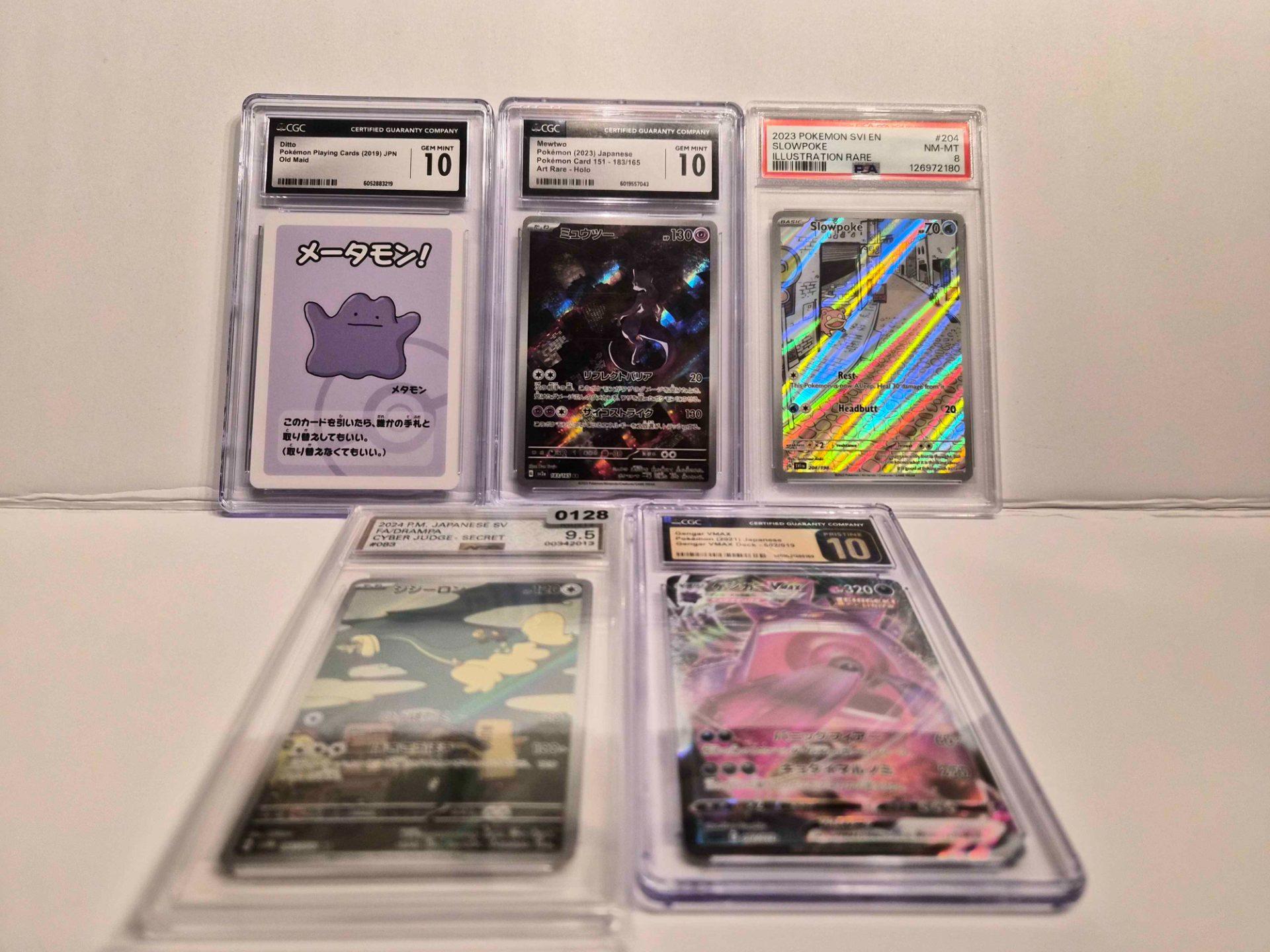

What Does "Mint Condition" Actually Mean? A Beginner's Guide to Card Grading
Published on WV Card Hub
If you've spent more than five minutes looking at cards on eBay, you've seen it. "MINT CONDITION." "GEM MINT." "PSA 10 EQUIVALENT." Sometimes attached to a card that, when the photos actually load, has a crease running through the middle of it.
The word "mint" gets thrown around so casually in this hobby that it's basically lost meaning in casual selling. But in the world of professional card grading — where condition directly determines value — it means something very specific. And understanding the difference between seller-speak and actual grading standards is one of the more useful things a new collector can learn early.
Why Condition Matters So Much
A card's condition affects its value in ways that can genuinely be hard to believe until you see it firsthand. The same card — same year, same artwork, same everything — can be worth $10 in average condition and $200 in near-perfect condition. For vintage cards or highly sought-after modern ones, that spread gets even more extreme.
This exists because collectors care about owning things as close to their original state as possible. A card that looks like it just came out of the pack fifty years ago is rarer and more desirable than one that clearly spent time in someone's back pocket. Condition is a proxy for history and preservation.
The Grading Scale
Professional grading companies — PSA, BGS, SGC, and others — evaluate cards on a numeric scale. PSA uses a 1–10 scale that most people have heard of:
PSA 10 (Gem Mint) is the top. Four sharp corners, no surface scratches visible to the naked eye, perfect centering (or very close to it), clean edges. These are cards that came out of the pack and went straight into protection without being touched. They're rare even in modern sets.
PSA 9 (Mint) is still excellent. One or two very minor imperfections allowed — a tiny surface scratch visible only at the right angle, centering that's slightly off. Most people would look at a PSA 9 and think it looks flawless.
PSA 8 (Near Mint–Mint) starts to show light wear. Edges might have the faintest bit of wear, centering is noticeable but not extreme. Still a great-looking card.
PSA 7 (Near Mint) and below get progressively more noticeable wear — edge nicks, soft corners, printing imperfections, visible scratches.
PSA 1 is a card that's been through some things. It's authenticated and identifiable, but it's seen better days.
What Graders Actually Look At
When a professional grader evaluates a card, they're checking four main areas:
Centering — Is the artwork centered between the borders? Off-center cards are surprisingly common straight out of packs, and bad centering can tank an otherwise clean card's grade.
Corners — The four corners are usually the first place wear appears. They go from sharp (perfect) to fuzzy (visible fiber wear) as a card ages and gets handled.
Edges — The four edges of the card. Nicks, chips, and roughness all count against the grade.
Surface — Scratches, print defects, creases, staining, or any other damage to the front or back of the card face itself.
A card has to do well across all four categories to grade high. A card with flawless centering and perfect edges that has a single deep scratch on the surface isn't getting a PSA 10.
So What Does "Mint" Actually Mean in Practice?
Here's the honest version: when a random seller on Facebook Marketplace calls a card "mint," they usually mean "it looks fine to me." That's not grading. That's vibes.
True mint — the kind that earns a PSA 9 or 10 — requires a card to have been handled almost not at all, stored properly from the moment it was opened, and to have come out of the pack without printing defects. It's genuinely uncommon, especially for older cards.
When you're buying ungraded cards and condition matters to you, ask for photos of all four corners, both edges, and the surface under good lighting. If a seller won't provide those, that tells you something.
And if you're thinking about submitting a card for grading yourself, look at it hard under good light and a loupe before you send it. Grading costs money — submission fees, shipping, sometimes months of waiting — and sending a PSA 7 in hoping for a 10 isn't a great use of any of it.
Should You Get Cards Graded?
That's a bigger question with a longer answer, but the short version: grading makes the most sense when the card is valuable enough that the grade significantly changes what it's worth, and when you have reason to believe it'll grade well. We'll dig into that more in a future post.
For now, just knowing what the scale means and how to evaluate condition on your own puts you ahead of a lot of collectors — and saves you from overpaying for something described as "mint" that very much is not.
WV Card Hub is building a community around card shops, shows, and collectors across West Virginia. Whether you're just getting started or you've been in the hobby for years, there's a place for you here.